The Patronus Charm looks like a simple “anti-Dementor spell,” but it’s actually one of the strangest pieces of magic in the Harry Potter world because it reacts to identity, trauma, love, and even self-deception in ways other spells don’t.
It can change form, fail for psychological reasons, and even work for morally awful people, which makes it feel less like a normal charm and more like magic that judges (or mirrors) the caster.
Recommended for You:- The Secret Behind Professor Trelawney’s “Fake” Predictions
- How the Time-Turner Could Have Prevented the Battle of Hogwarts
- Why the Quidditch World Cup Was a Hidden Warning
- The Secret Behind Why Hogwarts Ghosts Never Leave
Why it’s not “just a shield”
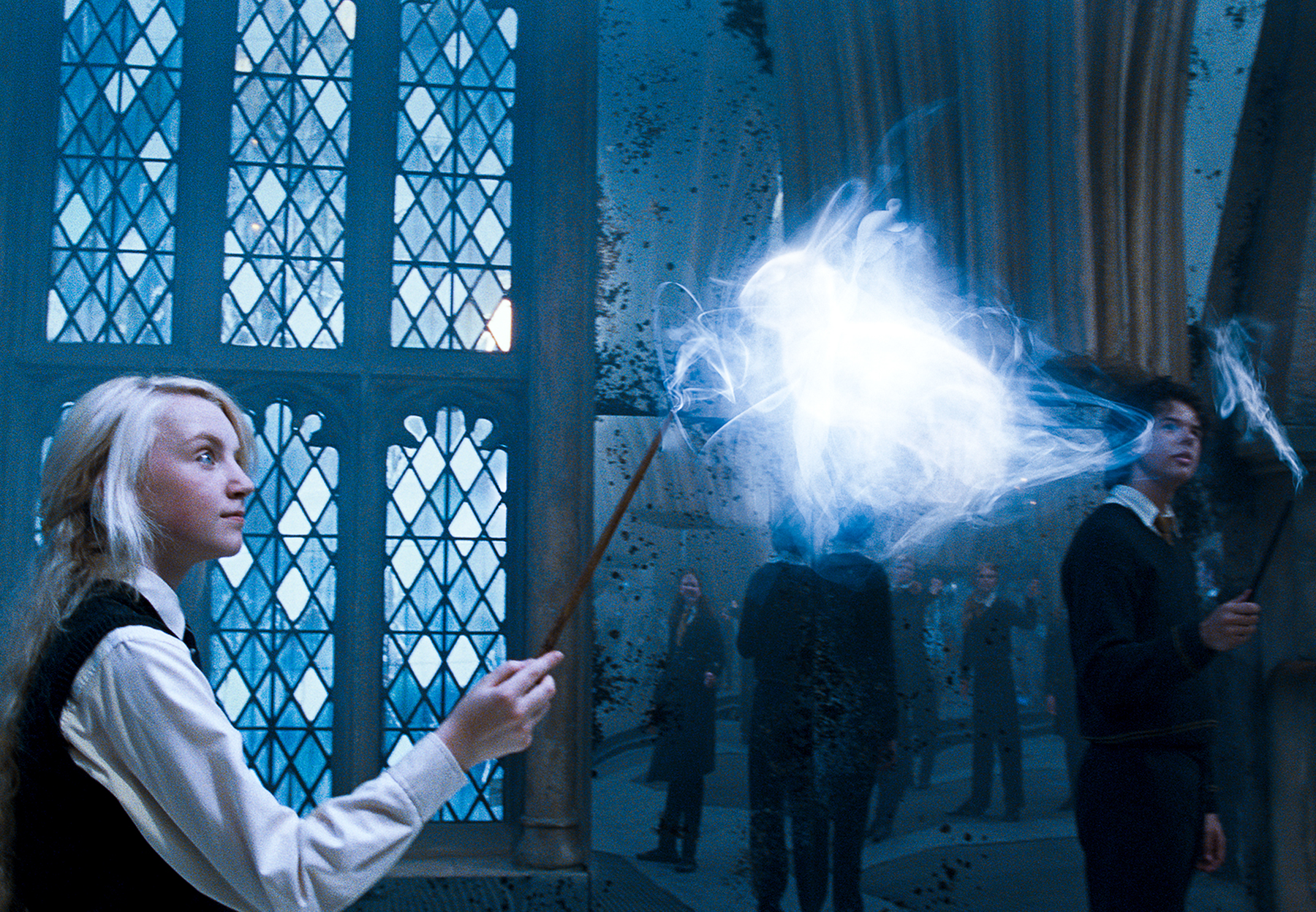
Officially, the Patronus Charm is a defensive spell that produces a silvery guardian, usually in animal form, and it protects the caster from Dementors by pushing them back (or giving them something else to feed on).
The same canon sources also say it’s literally formed from hope and happiness, meaning it isn’t powered by raw magical strength alone, but by a very specific mental and emotional fuel.
That detail already makes it unusual in the wizarding world, where most spells are about skill, focus, and correct technique. With a Patronus, “how you feel” is not flavour text—it’s the engine.
The biggest mystery: what a Patronus really is
The Patronus isn’t described as a simple light beam or protective bubble; it has “form and substance” when it becomes corporeal, taking the shape of an animal. A non-corporeal Patronus can appear as vapour or smoke, and while it can offer limited protection, it’s explicitly “not a true Patronus” in the same way a corporeal one is.
So what is a corporeal Patronus, really: a creature, a projection, a piece of your soul, or a magical construct that behaves like an animal? The text quietly leans into that uncertainty by describing how some casters may even choose a weaker, mist-like Patronus on purpose to hide what their real Patronus would reveal.
In other words, the Patronus is one of the only spells where the result can expose you, socially and emotionally, not just magically.
The “secret self” theory (and why it changes everything)
One of the most intriguing official explanations comes from the in-world charms researcher Professor Catullus Spangle, who argues that the Patronus represents “that which is hidden, unknown but necessary within the personality.”
Spangle says that when a human faces “inhuman evil” like a Dementor, they must draw on inner resources they might never have needed, and the Patronus is that “awakened secret self” brought into the open.
This frames the Patronus as more than happiness made visible—it’s a kind of emergency version of you, summoned when you are psychologically cornered.
That idea explains several weird facts at once: why Patronuses sometimes surprise their owners, why they can shift with major life changes, and why some people can’t cast one until a shock forces something inside them to “wake up.”
It also hints at a darker possibility: if a Patronus is your “secret self,” then learning to cast it is not only learning a charm—it is learning which part of you survives when everything else is stripped away.
Why Patronus forms are unpredictable (and sometimes inconvenient)
Canon says there is “no reliable system” for predicting a Patronus form. It’s usual (though not guaranteed) for the Patronus to match animals common in the caster’s native country, which suggests culture and environment might shape the symbolism your mind reaches for under stress.
But then the canon immediately undercuts any neat “spirit animal” logic: identical twins can produce very different Patronuses, and even the caster might not recognise the animal in rare cases. That implies it’s not simply genetics, not simply personality quizzes, and not simply “your favourite animal.”
Spangle even claims that producing the Patronus of your choice (like your favourite animal) can be a red flag—an “indicator of obsession or eccentricity,” as if choosing your own symbol might mean you’re trying too hard to control what should be an honest reveal.
That’s a wild concept for a school-taught defensive spell: the Patronus may punish self-performance and reward psychological truth.
Love, grief, and the Patronus “metamorphosis”
One of the strongest pieces of evidence that the Patronus is tied to deep identity is that it can change over time.
The official writing states that Patronus forms have transformed because of bereavement, falling in love, or profound shifts in character, and it gives a direct example: Nymphadora Tonks’s Patronus changes from a jack rabbit to a wolf when she falls in love with Remus Lupin.
This is mysterious because most magic in Harry Potter does not permanently reshape itself around your relationships. Your wand can be won, yes, but your everyday spellwork doesn’t usually rewrite its output just because your inner life changed.
A Patronus does. That makes it feel less like a “spell you cast” and more like a magical readout of who you are at the moment you need protection most.
The uncomfortable twist: bad people can cast it
Many witches and wizards believe someone “not pure of heart” cannot produce a successful Patronus, and the official writing calls that belief “widespread and justified.”
The same text also explains why people believe it: there’s a famous case of a Dark wizard, Raczidian, whose attempt backfired and he was devoured by maggots.
But then comes the twist that makes the charm far more mysterious: a rare few “of questionable morals” have succeeded, and Dolores Umbridge is named as someone who can conjure a cat Patronus to protect herself from Dementors.
The explanation offered is chillingly realistic—if you truly and confidently believe you are right, that belief itself might supply the “necessary happiness.”
So the Patronus does not strictly measure moral goodness. It may measure conviction, self-justification, or the ability to generate positive emotion even from harmful beliefs.
That raises a theory: the Patronus isn’t a purity test—it’s a psychological test. It doesn’t ask, “Are you kind?” It asks, “Can you produce hope in the face of despair, and do you believe your hope is valid?”
The “anti-Dementor” paradox (why it’s hardest when you need it)
The Patronus is made to defend against Dementors, yet Dementors are specifically designed to crush happiness and hope. That means the spell is most needed precisely when it’s most difficult to power, because the enemy attacks the fuel source.
This paradox makes the Patronus feel like a story about mental health, resilience, and memory as much as it is a piece of combat magic. In simple terms: the Patronus is a spell that demands you hold onto your best self while something is trying to erase it.
A hidden ability: Patronuses can speak
Many fans remember Patronuses as animal-shaped shields, but official canon also states that corporeal Patronuses can deliver messages, speaking in the caster’s voice. That’s a major clue that a Patronus isn’t merely “light shaped like an animal,” because it can carry information, travel, and communicate like an intelligent messenger.
This adds to the mystery of what “substance” a Patronus has, and how closely it is linked to the caster’s mind. If it can speak like you, is it borrowing your voice like a recording, or is it acting as a temporary extension of you?
A simple theory: the Patronus is memory given a body
Putting the canon pieces together, a strong theory is that a Patronus is what happens when a happy memory (or a hope) becomes so focused that it turns into a protective, semi-independent magical construct.
It’s powered by happiness and hope, but shaped by the “secret self” you access under threat, which is why the form can surprise you and can change after love or loss rewires your inner world.
This theory also explains why “purity” isn’t the real rule: if the Patronus is made from what you feed your own mind, then someone like Umbridge could still generate the emotional energy needed, even if the source is cruel satisfaction rather than empathy.
In that reading, the Patronus isn’t a moral reward—it’s a magical mirror, and that’s why it’s more mysterious than it looks.