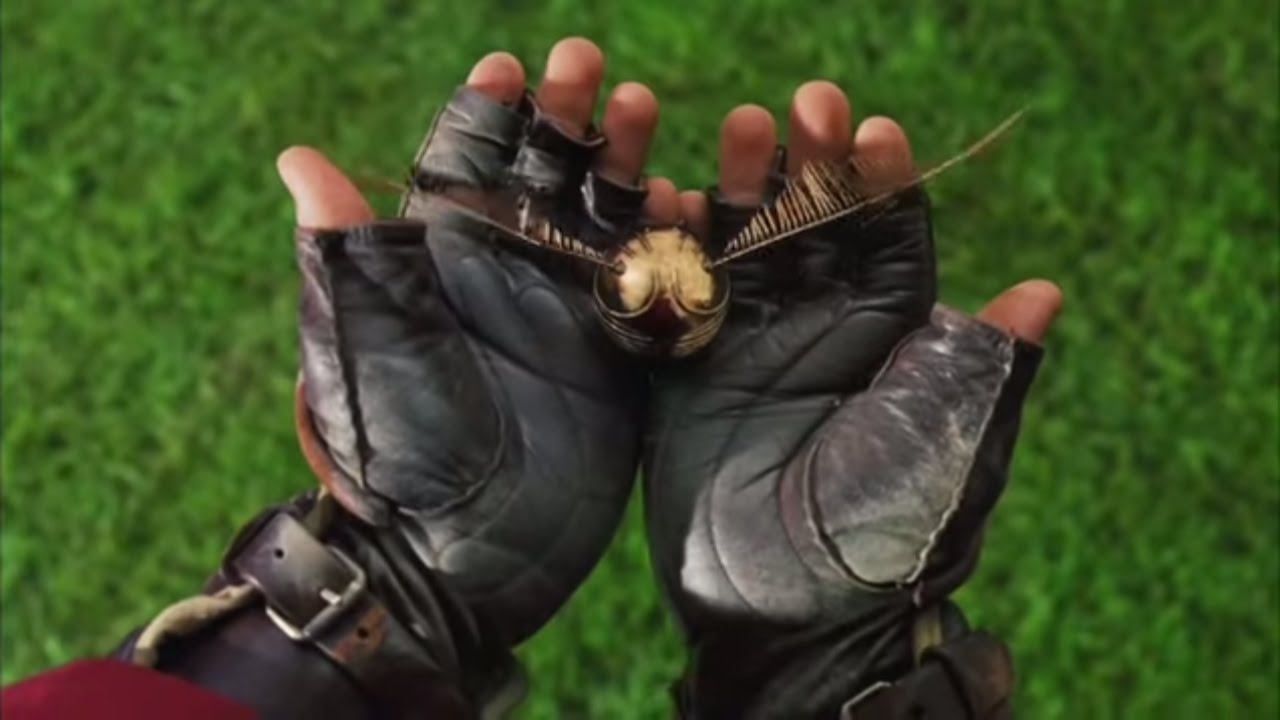
The Golden Snitch is one of the smallest objects in the wizarding world, but it may be one of the most important. Most witches and wizards see it as a fast, tricky ball used to end a Quidditch match. Catch it, get 150 points, and the game usually finishes.
But the Snitch is also strange. It has flesh memory. It reacts to touch. It is extremely hard to catch. It has a long history. And in Harry Potter’s story, it becomes something even bigger: a container for a secret message.
So here is the theory: the Golden Snitch was designed—not just accidentally able—to hold secrets.
In this article, we’ll explore why the Snitch may have been made to do more than fly. We’ll look at what the books show us, what the wizarding world values, and why a tiny golden ball might be the perfect tool for hiding information, protecting legacies, and testing character.
Recommended for You:What the books confirm: the Snitch can “remember” you
Before we jump into theories, we need to start with what is clearly established.
In Harry Potter and the Deathly Hallows, Harry receives a Snitch in Dumbledore’s will: the first Snitch Harry ever caught. That Snitch holds a message that only Harry can access. The key detail is this:
- The Snitch has flesh memory, meaning it remembers the first person who touched it.
That explains why the Snitch can be used like a lock. It can hide something and only reveal it to the right person.
This is not a small detail. It’s a huge piece of wizarding technology. And it raises a question: if the Snitch can do this, why was it built that way in the first place?
A normal sports object does not need to remember who touched it first. A Quaffle does not. A Bludger does not. But the Snitch does.
So either:
- The Snitch’s flesh memory was invented specifically for Quidditch fairness, and it later got reused for secret-keeping, or
- The flesh memory feature was always meant for something more, and Quidditch is only one part of the Snitch’s story.
This theory argues for option 2.
The Snitch’s weird design doesn’t match a simple sports tool
If you design an object only for a game, you usually prioritize safety, consistency, and easy rule enforcement. The Snitch is almost the opposite of that.
Think about its design:
- It is tiny and extremely fast, making it hard to see and catch.
- It has wings and behaves like a living creature.
- It has flesh memory, which means it “knows” people.
- It is valuable, rare, and treated with special care.
That doesn’t sound like a regular piece of sports equipment. It sounds like a magical device with security features.
Even the way Seekers talk about the Snitch feels different from the way other players talk about the Quaffle. The Snitch isn’t just “the ball.” It is the thing that decides everything. In the culture of Quidditch, it is a symbol of skill, patience, and instinct.
That’s important, because secret-keeping in the wizarding world often works the same way. The best magical protections are not only spells; they are tests. They test who you are.
The Snitch is already a test—every match.
Theory 1: Flesh memory was invented to prevent cheating, but it also enabled secret storage
Let’s start with the most practical reason flesh memory could exist.
Quidditch is chaotic. Balls fly everywhere. Players fall off brooms. Weather gets wild. In that mess, someone could try to cheat by swapping the Snitch, charming it, or claiming they caught it first.
Flesh memory helps prevent certain kinds of cheating because it creates a clear “first touch” record. If a Snitch is released at the start of a match, it could in theory confirm whether it has been handled incorrectly.
But here’s the catch: the books do not present flesh memory as a standard sports referee tool. It is treated as a clever magical feature that Dumbledore can exploit. That suggests it is not commonly used in everyday rule enforcement, or at least not talked about often.
So a better explanation is this: flesh memory was designed for Quidditch, but the magical principle behind it was always powerful enough to be used for authentication.
In Muggle terms, it’s like a fingerprint scanner. Maybe the original designers wanted “anti-cheat security,” but they accidentally invented a magical identity lock.
Once you have that, secret-keeping becomes easy:
- Hide a message in the Snitch.
- Only the first person to touch it can retrieve it.
- If someone steals it, it stays closed.
That is exactly what happens with Harry’s Snitch.
Theory 2: The Snitch’s ancestor was a real creature—and that creature was prized for secrecy
Long before the Golden Snitch, Quidditch used a magical bird called the Golden Snidget. Wizards tried to catch it during games. It was fast, rare, and valuable. Eventually the Snidget became protected, and the Golden Snitch was invented as a replacement.
If the Snitch was designed to imitate a living creature, that could explain why it has complex behavior. It is not just a ball; it is a mechanical echo of a rare magical animal.
Now think about what that implies. If the Snidget was rare and valuable, then catching it was not only about sport. It was about possession of something precious. In societies, rare valuable items often become connected to power, status, and secret exchanges.
If the Snitch was designed as a replacement for a creature that people once hunted, then its design might have inherited something deeper:
- The idea that it should be hard to capture.
- The idea that it should “belong” to the one who caught it.
- The idea that it should carry meaning beyond the game.
In other words, the Snitch did not just replace the Snidget’s function in Quidditch. It replaced the myth around it too.
And myths are full of secrets.
Theory 3: The Snitch is a perfect “trust vault” because it’s easy to hide and hard to open
If you wanted to hide a secret in the wizarding world, you have many options:
- Enchant a book.
- Use a Pensieve.
- Hide it behind wards.
- Put it in Gringotts.
- Use a Fidelius Charm.
So why choose a Snitch?
Because it has three advantages:
- Portability: It fits in a pocket and looks harmless.
- Social camouflage: People assume it’s sports-related, not a vault.
- Built-in access control: Flesh memory can restrict access to one person.
A Snitch is also incredibly difficult to catch. That matters because some secrets should not be easy to “grab.” If you are not skilled, you fail. If you are impatient, you fail. If you panic, you fail.
That mirrors many magical protections in the series. Dumbledore’s obstacles in the Philosopher’s Stone test different qualities: logic, courage, selflessness. A secret in a Snitch tests something too: focus, intention, and the right moment.
Even the way Harry opens the Snitch supports this. He does not force it. He does not smash it. He does not charm it open. It opens through a personal gesture tied to identity and meaning.
That is not an accident. It’s a character test built into the object.
Theory 4: The Snitch is designed to reward the “right” kind of Seeker
Quidditch is not only physical. For Seekers, it is deeply mental.
A good Seeker needs to:
- Notice tiny movements
- Stay calm under pressure
- Ignore distractions
- Commit at the right moment
Those traits also describe someone who can be trusted with sensitive information.
So here’s the theory twist: the Snitch may have been designed not only to end matches, but to shape a certain kind of person. A sport can train a culture. It can teach values.
If wizarding society needed people who could handle responsibility—messengers, Aurors, secret-keepers—then a game that rewards patience and perception might quietly support that.
The Snitch becomes a training tool for a mindset:
- Watch carefully.
- Act decisively.
- Don’t show your plan.
- Don’t panic when everyone is watching.
That is also how you survive political danger.
In a world with dark wizards, secret societies, and hidden wars, that mindset matters. So it is possible that the Snitch’s special properties evolved because they fit a deeper cultural need: building trust in the person who catches it.
Theory 5: Dumbledore didn’t “hack” the Snitch—he used it as intended
Many readers see Dumbledore’s use of the Snitch as clever improvisation. But what if it wasn’t improvisation at all?
What if the Snitch was always meant to be a container for personal legacies?
Think about how Dumbledore chooses to pass things on:
- The Deluminator goes to Ron, who struggles with leaving and returning.
- The book of fairy tales goes to Hermione, who values research and meaning.
- The Snitch goes to Harry, whose life is shaped by death and sacrifice.
These are not random gifts. They are targeted objects.
Now ask: why would Dumbledore trust a random piece of sports equipment to carry one of the most important keys to Voldemort’s defeat?
Because it may not be “random sports equipment” at all. It may be a recognized magical container with:
- strong enchantment potential,
- identity-based access,
- and a cultural meaning tied to earned ownership.
Dumbledore could be relying on a known tradition: that a Snitch can safely carry something intended for the person who truly “won” it.
In simple terms, it’s like giving someone a locked box that only opens for them, and that also symbolizes a personal achievement.
Theory 6: The Snitch reflects a wizarding belief: secrets should be earned, not given
The Harry Potter world often shows a very specific attitude toward knowledge.
Some knowledge is taught in class. But the most important knowledge is often hidden until the person is ready:
- The Marauder’s Map reveals itself only with the right command.
- The Room of Requirement appears only when needed.
- Horcrux information is rare, restricted, and dangerous.
- The Deathly Hallows are wrapped in story and doubt.
Even Hogwarts itself is full of hidden passages and shifting stairs, like the castle wants you to discover things through effort.
A Snitch fits this worldview perfectly. It is literally a magical object that says: “If you are skilled enough, you can have me.” That message can easily be extended to secrets: “If you are the right person, you can have this knowledge.”
So the Snitch may have been designed to carry secrets because wizard culture prefers earned access over open access.
This is also safer. If information is dangerous, you don’t want it spreading easily. A Snitch limits access naturally.
Theory 7: A secret in a Snitch is harder to detect than a spell on parchment
In the wizarding world, people can detect many kinds of enchantments. Skilled witches and wizards can sense curses, notice jinxes, and look for hidden compartments. Some objects also draw attention because they are known “secret holders,” like diaries or lockets.
But a Snitch is a perfect disguise:
- It is already enchanted (it has to fly).
- It is already complex (hard to tell if extra magic is present).
- It is commonly stored with other Quidditch items.
If someone sees a Snitch, they think “sports.” Their brain stops searching.
That is one of the strongest real-world principles of security too: the best hiding place is the place nobody suspects.
And because the Snitch is associated with games and school, it feels innocent. It doesn’t look like a weapon or a vault. That makes it an excellent tool for hiding something important in plain sight.
What secret might the Snitch originally have been meant to carry?
If you accept the idea that the Snitch was designed to hold secrets, the next question is: what kinds of secrets?
Here are a few plausible categories, based on wizarding culture:
- Ownership proof: A Snitch could store the “true winner,” settling disputes or honoring tradition.
- Messages for heirs: Families might pass down a Snitch with a memory-locked note inside.
- Team signals: In darker times, teams or clubs could use Snitches for private communications.
- Political tokens: A Snitch could serve as a “sealed promise,” opened only by the intended person.
The most interesting part is that these uses match the Snitch’s traits: personal, exclusive, and earned.
A darker angle: the Snitch as a tool for control
Not every secret is good. A device that can hide information can also hide manipulation.
If you can store a message that only one person can access, you can:
- isolate them from others,
- control what they learn,
- and time when they discover it.
That is exactly what Dumbledore does, in a way. He does not tell Harry everything at once. He sets a path. Some readers see that as wise, others see it as controlling.
So another version of this theory is that the Snitch was designed for secrecy because secrecy is a form of power in the wizarding world. A Snitch can become a “beautiful” kind of control—wrapped in gold, sport, and tradition.
That makes it a perfect symbol for the series, where charming objects often hide dangerous truths.
The symbolism: why a Snitch makes narrative sense
Even outside lore, the Snitch is the perfect story device.
Harry’s first big success at Hogwarts is catching the Snitch. It marks him as special. It ties him to his father’s talent, his own courage, and his place in the school.
Then, years later, a Snitch returns as a key to defeating Voldemort. That closes a circle: the object that made him famous as a boy becomes the object that helps him accept death as a man.
That kind of storytelling works best when the object feels “meant” for secrets. And the Snitch does.
It is small, mysterious, and hard to catch—just like the truth in Harry’s life.
Final theory: the Snitch was built as a “sealed memory” object, and Quidditch made it popular
Put all the pieces together, and one idea stands out:
The Snitch may have started as a magical concept: a tiny flying object that can store identity-based information. Maybe it was invented for private messaging or personal legacy. Later, Quidditch adopted it because it added drama, skill, and a clean win condition.
Or the reverse happened: it was invented for Quidditch, but wizards quickly realized its security potential and began using it for secrets in rare cases.
Either way, the end result is the same:
The Golden Snitch is not just a ball. It is a magical lock, a symbol of earned victory, and a container built for truths that should only be found by the right person at the right time.
And in a world like Harry Potter’s—where love, death, and choice matter more than raw power—that might be exactly why it was designed that way.