Harry Potter is famous for many things: the lightning scar, the invisibility cloak, and his brave choices when it matters most. But there is one part of his story that quietly keeps showing up at the exact right moments—his broomsticks.
From the first time Harry flies at Hogwarts to the day he becomes a skilled fighter in the air, broomsticks are more than just sports gear for him. In a way, they are a kind of destiny. They arrive when he needs help. They pull him out of danger. They help him act faster than almost anyone else.
This theory looks at a simple idea: Harry’s broomsticks were always meant to save him. Not because the brooms are magical “chosen objects” on their own, but because Harry’s story, his skills, and even the people around him keep pushing him toward the sky—where he survives again and again.
Recommended for You:- How the Goblins of Gringotts Hold the Key to Wizarding Power
- The Secret History of Ollivander’s Wand Shop Uncovered
- The Real Reason Pettigrew Stayed Loyal to Voldemort
- How the Time-Turner Could Have Prevented the Battle of Hogwarts
Broomsticks: The most underrated “plot armor”
In fantasy stories, the hero often has a weapon that feels “meant” for them. In Harry Potter, that role usually goes to wands. Harry’s wand core matches Voldemort’s. The Elder Wand becomes important later. So it’s easy to assume the wand is Harry’s main destiny tool.
But look at what actually saves Harry in daily life—especially at Hogwarts and during the war. It’s often speed, movement, and escape. And that’s where broomsticks shine.
A broomstick gives Harry three huge advantages:
- Fast travel when adults are far away or rules block him
- A way to escape danger when spells are not enough
- A place where he is strongest, most confident, and most focused
In other words, flying is where Harry becomes the “best version” of himself. That alone makes broomsticks feel destined to protect him.
The first sign: Flying chooses Harry before Harry chooses it
Harry does not go to Hogwarts dreaming of being a flyer. He grew up in a cupboard, with no idea that the wizarding world even exists. Yet the moment he gets a broom in his hands during Madam Hooch’s first lesson, something clicks.
He catches Neville’s Remembrall in the air with pure instinct. No planning. No fear. No thinking.
That matters because Harry’s best survival moments often come from instinct too. When the pressure hits, Harry moves. He reacts. He leaps before he overthinks.
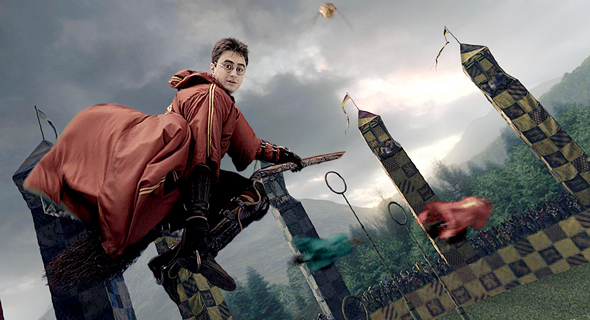
McGonagall sees this and bends the rules to put him on the Gryffindor Quidditch team as a Seeker. That decision changes everything. It is not just about sports—it is about shaping Harry’s identity at school.
From that point onward, Harry is not only “the boy who lived.” He is also “the kid who can fly.”
The Nimbus 2000: A gift that creates safety and belonging
Harry’s first broom, the Nimbus 2000, is not something he earns through money or family. It is given to him by McGonagall because she believes in his talent.
That is huge for Harry emotionally. The Nimbus 2000 becomes his first real “personal treasure” at Hogwarts. Something that is his, something that makes him special in a good way, not in a scary “Voldemort tried to kill you” way.
Here’s the theory point: safety is not always about shields and spells. Sometimes safety is about feeling you belong somewhere.
The Nimbus helps Harry build:
- Confidence
- Friendships (Quidditch team bonds)
- A reason to look forward to school life
- A skill that later becomes useful in real danger
So even when the Nimbus is “just a broom,” it quietly saves Harry by giving him stability. And stability matters when your life is full of trauma.
The cursed broom incident: A warning that also trains him
In Harry’s first year, during a Quidditch match, his broom starts acting violently, trying to throw him off. Later we learn Professor Quirrell was involved, and Snape was trying to counter the curse.
This scene does two things at once:
- It puts Harry in deadly danger.
- It teaches Harry, very early, that flying is not only fun—it is a battlefield.
That lesson stays with him.
As the series goes on, Harry doesn’t treat the sky like a playground. He treats it like a place where anything can happen. He learns to stay alert, to hold on, to think under pressure. That training becomes priceless later when Death Eaters attack and when he must fly to survive.
So even this “bad” broom moment adds to the idea of destiny. The broom tries to kill him, but the experience builds the exact mental toughness he will need.
The Firebolt: Not just faster—made for war-level flying
When Harry gets the Firebolt, it feels like the story is saying: “You’re not a beginner anymore.”
The Firebolt is not just a luxury item. It’s a top-tier broom. It turns Harry into a flyer who can do impossible moves, sudden dives, and sharp turns at extreme speed.
And if you think about Harry’s life, extreme speed becomes a survival tool.
This is where the theory gets stronger: Harry’s best brooms arrive right before his world gets darker.
- Nimbus 2000 arrives when he needs a place at Hogwarts
- Firebolt arrives when threats become more serious and personal
By the time Voldemort is rising again, Harry’s flying ability is already far beyond normal student level.
It’s as if the story “arms” him, not only with spells, but with motion.
Flying matches Harry’s personality in a way spells don’t
Harry is not the kind of wizard who wins by being the most technical. Hermione is better at studying and complex magic. Dumbledore is on another level entirely. Snape is brilliant at creating spells. Voldemort is terrifyingly skilled.
Harry’s strength is different.
He is quick, brave, and willing to act. He trusts his gut. He protects others even when it hurts him. He is at his best when he has to decide fast.
Broomsticks reward exactly those traits.
In Quidditch, Harry succeeds because:
- He reads the situation fast
- He commits fully
- He stays focused under pressure
- He takes risks at the right moment
These are the same skills that keep him alive outside the stadium. So broomsticks are not random tools in his life—they are tools built for his natural style of survival.
The sky becomes Harry’s escape route again and again
Throughout the Harry Potter books and movies, danger often shows up in places where adults are not present or cannot help in time: corridors, forbidden forests, hidden rooms, and even the streets during the war.
Broomsticks offer something rare: a clean escape route.
When you can fly, you can:
- Leave the ground-based danger behind
- Avoid obstacles
- Travel over walls and crowds
- Move too fast for many attackers to aim properly
This is not just convenient. It can be life-saving.
In a world where apparating is difficult, controlled, or restricted (especially for underage students), broom travel becomes a realistic and powerful way to survive.
The “Seven Potters” plan: Broomsticks as literal life-savers
One of the clearest examples is the “Seven Potters” escape in Deathly Hallows. Harry must leave Privet Drive, and Voldemort’s forces are waiting.
This plan uses flying heavily:
- Broomsticks
- Thestrals
- Hagrid’s motorbike
The goal is speed, confusion, and mobility. And while the plan is risky, it shows something important: when the wizarding world needs to move Harry safely, it does not rely only on spells.
It relies on flight.
In a world where teleportation can be tracked, blocked, or manipulated, physical flying becomes one of the safest options. That’s a key point in this theory: broomsticks save Harry because they give him a type of movement Voldemort cannot fully control.
Voldemort fears what he can’t easily predict: movement and instinct
Voldemort’s mind is structured around control. He controls followers through fear. He controls plans through power. He even tries to control death itself.
But broom flight is messy in the best way.
A duel on the ground can become a test of magical knowledge and force. Voldemort loves that. But high-speed flight is unpredictable. It turns the fight into angles, timing, reflexes, and courage.
That is Harry’s territory.
Harry is not always the strongest in spellwork, but he is extremely hard to corner when he can move. His talent in the air becomes a kind of “anti-Voldemort advantage”—because it runs on instinct, not dominance.
Quidditch trained Harry for the Second Wizarding War
It’s easy to treat Quidditch as a fun school sport, separate from the darker plot. But if you read closely, Quidditch prepares Harry for war in multiple ways.
Quidditch teaches him:
- Situational awareness (watching players, Bludgers, and the Snitch)
- Keeping calm during chaos
- Trusting teammates
- Taking hits and continuing
- Making decisions in seconds
Those are combat skills.
When Harry later leads Dumbledore’s Army, sneaks into dangerous places, and fights Death Eaters, he is using the same mental muscle Quidditch built.
So broomsticks save him in a deeper way: they trained him to survive emotionally and mentally when everything becomes chaos.
The Firebolt and the idea of “timely gifts”
There’s also something symbolic about the way broomsticks come into Harry’s life. They often arrive through other people’s choices.
McGonagall gives him his first broom access. Sirius gives him the Firebolt. Members of the Order provide brooms and flight plans when things get serious.
This matters because Harry’s story is partly about love showing up as protection.
Lily’s sacrifice is the biggest example. But smaller forms of care also surround him: gifts, support, and adults who break rules for him when rules don’t protect him.
Broomsticks are part of that pattern. They are protective love, shaped into wood, enchantments, and speed.
A small but powerful symbol: Harry is “hard to keep down”
Harry’s life is full of attempts to control him:
- The Dursleys try to crush his identity
- Umbridge tries to silence him
- Voldemort tries to kill him or break him
- The Ministry tries to shape his image
And what does Harry do, again and again?
He rises.
Broomsticks visually represent that theme. They lift him off the ground. They show him freedom. They let him move above the rules, above fear, above walls, and sometimes above the reach of enemies.
If you want a simple theory statement, it’s this: Harry’s broomsticks were destined to save him because they reflect who Harry really is—someone who cannot be kept down.
Why this theory fits the “chosen one” story without changing canon
This theory does not claim the broomsticks are magical fate objects like Horcruxes or Hallows. It doesn’t need to.
It fits canon because it focuses on patterns that already exist:
- Harry’s greatest natural talent is flying
- Key adults give him brooms at meaningful times
- Many life-threatening events involve escape and movement
- Voldemort’s style of power clashes with Harry’s instinctive mobility
So the “destiny” here is not a prophecy about a broom. It’s a destiny of skill, timing, and the right tools arriving when the hero is ready.
Final thought: Harry’s broomsticks saved him because they helped him become Harry
When Harry flies, he is not just surviving—he is fully himself. The boy who grew up trapped finally experiences control over his own direction. He chooses where to go, how fast, and how high.
That’s why broomsticks feel destined in his story.
They don’t only save him in the action scenes. They save him in the quiet moments too—by giving him confidence, belonging, and a place where fear loses its grip.
And in a world like Harry Potter’s, sometimes that is the strongest magic of all.