The Time-Turner could have prevented (or at least massively reduced) the Battle of Hogwarts—but only in very specific ways that fit the wizarding world’s strict time-travel limits, and even then it might simply “lock in” what already happened rather than letting anyone rewrite it freely.
Wizarding World canon also makes it clear why this solution isn’t available by the time Harry returns to Hogwarts: the Ministry’s stock of Time-Turners is destroyed in the Department of Mysteries, and time travel is tightly restricted and dangerous even for short jumps.
Recommended for You:- The Real Reason Pettigrew Stayed Loyal to Voldemort
- Why Harry’s Broomsticks Were Always Destined to Save Him
- The Secret Behind Professor Trelawney’s “Fake” Predictions
- Why the Patronus Charm Is More Mysterious Than You Think
How Time-Turners really work
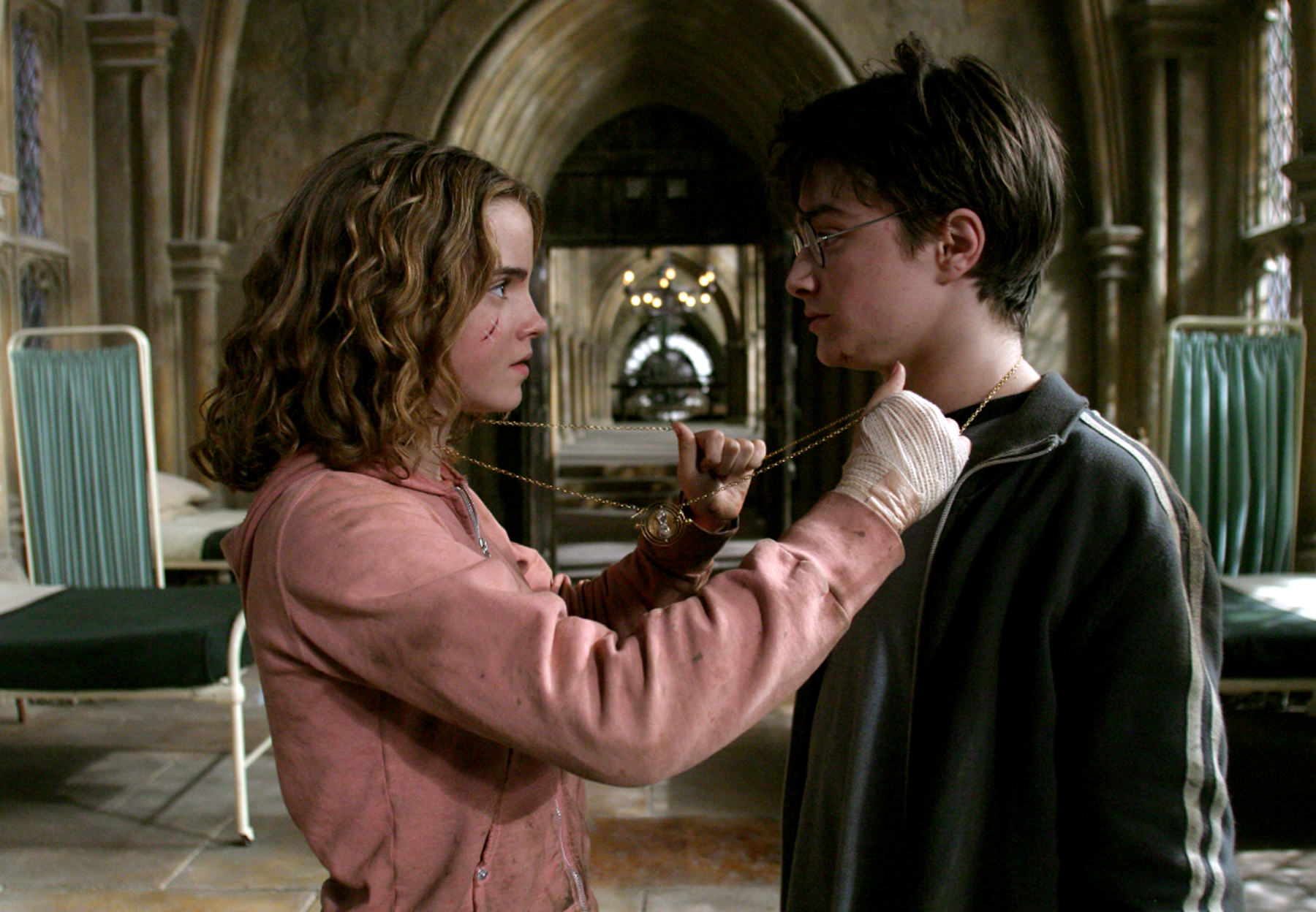
A Time-Turner is a small enchanted hourglass that lets a witch or wizard “relive” hours in the past by turning it, essentially stepping back into earlier time.
The official Wizarding World explanation says the safest practical limit is about five hours; going further back has caused “catastrophic harm” and even disturbances that affect people’s descendants in the present.
That five-hour ceiling matters because the Battle of Hogwarts isn’t a problem you solve with a quick rewind like “oops, I forgot my homework.” The battle is the end of a long chain of choices and discoveries, and the further back you try to change things, the more likely you create unpredictable damage (or you simply can’t do it at all without severe consequences).
Just as important: Time-Turners are wrapped in “hundreds of laws,” used for “trivial” scheduling problems, and rarely approved for anything bigger. So even if a Time-Turner exists, using it to prevent a war-scale event is the exact kind of thing the Ministry tries to stop.
Why the Battle happens when it does
In the book timeline, the Battle of Hogwarts takes place across May 1–2, 1998, ending shortly after 5:30 AM with Voldemort’s death. That timing is crucial, because it means a five-hour Time-Turner window could only affect the final stretch—evacuations, defenses, last-minute Horcrux moves, and specific deaths—rather than the full sequence that brought Voldemort to Hogwarts in the first place.
So the realistic “Time-Turner prevention” theory is not “go back weeks and stop everything.” It’s “go back a few hours and change tactics.”
The big obstacle: no Time-Turners left
The most canon-friendly reason nobody Time-Turners the Battle away is simple: the Ministry’s entire stock of Time-Turners is destroyed during the fight in the Department of Mysteries (around three years after Hermione was allowed to use one at Hogwarts).
In other words, by the time we reach Deathly Hallows, the easy, Ministry-issued Time-Turner solution has been written out of the world.
This also fits the author’s stated intent: time travel created too many plot problems, so the story removes the devices to stop characters from undoing future disasters.
Still, theories are fun because they ask: “If one did exist, what could it do?” Let’s explore the most plausible scenarios.
Theory 1: A five-hour “tactical rewind” stops the worst losses
If a defender at Hogwarts had a Time-Turner that could safely go back within the five-hour limit, the best use wouldn’t be to “cancel the battle.” It would be to reduce casualties and prevent key tactical mistakes—because changing small, local events is more realistic than trying to erase the whole confrontation.
Here are a few ways that could work inside the final-night window:
- Warn specific fighters to avoid known death-traps, changing who goes where and when during the worst moments.
- Move vulnerable students and non-combatants earlier, tightening evacuation routes before the castle becomes chaotic.
- Reposition defenders, healers, and protective enchantments a few hours sooner, so the school’s defenses peak at the moment the fighting turns deadly.
Why this is plausible: Wizarding World canon says reusing even “a single hour” can have dramatic consequences. That suggests even a small jump could matter a lot in a battle that swings on seconds—who arrives first, who gets cornered, who is seen, who escapes.
Why it might not fully prevent the battle: the battle is triggered by Voldemort discovering Harry is at Hogwarts hunting Horcruxes, so unless the Time-Turner user can prevent that discovery within the five-hour window, the overall fight still happens—just with different outcomes.
Theory 2: The Time-Turner is used to “hide” Harry better, preventing the battle from starting
A stronger version of the theory is that the Time-Turner prevents Voldemort from launching the full assault by keeping Harry’s presence at Hogwarts secret. This is the closest you can get to “preventing the battle” without rewriting the entire year.
In this scenario, the Time-Turner user goes back a few hours and focuses on one objective: stop the leak—whatever chain of sightings, messages, or mistakes tipped Voldemort off. If Voldemort doesn’t learn Harry is inside the castle that night, he may not bring his army to the gates at that time, which delays or reshapes the confrontation.
But there’s a catch built into Time-Turner lore: time travel is dangerous and tightly regulated specifically because it can ripple outward in ways no one can predict. Even if the battle is delayed, the attempt to “fix” the timeline could produce a different disaster—one that is worse, or one that removes a crucial opportunity.
Theory 3: A Time-Turner creates a “closed loop,” meaning it never really prevented anything
Many readers interpret Prisoner of Azkaban-style time travel as a closed loop: you don’t change history, you fulfill it. This interpretation isn’t stated as a universal law in the official Wizarding World article, but the official warnings about danger and consequences support the idea that messing with time is not a clean “undo” button.
If time travel tends to snap toward a stable outcome, then “using a Time-Turner to prevent the Battle of Hogwarts” might actually be what caused certain details of the battle to happen the way they did. Under that kind of theory:
- A Time-Turner user tries to save someone, but their actions indirectly push them into the moment they were always going to face.
- The user’s attempt to stop the battle becomes one of the reasons the defenders are ready enough to win it.
- The Time-Turner doesn’t erase the conflict—it ensures the exact sequence that leads to Voldemort’s defeat at the exact time it must happen.
This sounds tragic, but it matches the Wizarding World framing: time is not something the human mind can safely “tamper” with, and even small reuses of time can cause major unintended fallout.
Theory 4: The Ministry refuses permission—so the heroes never even try
Even if a Time-Turner exists somewhere, it doesn’t mean the good side can use it. Wizarding World canon stresses that Time-Turners are controlled, rare, and governed by strict laws, with special permission required even for a student timetable.
So imagine someone in the Order of the Phoenix tries to request one to stop a looming battle. The Ministry’s likely response is: absolutely not.
- It’s not a “trivial” time-management purpose.
- It risks catastrophic harm.
- It could be used as a weapon if it falls into the wrong hands.
In a darker twist, the Ministry might even fear that if they authorize time travel for war, they set a precedent that makes the entire wizarding world unstable—every future tragedy becomes a reason for someone to try to redo time.
The most believable outcome
The most canon-friendly version of this theory is: a Time-Turner could not safely go back far enough to erase all causes of the Battle of Hogwarts, but it could plausibly reduce damage and save lives during the final hours—if one existed and if someone dared to use it.
The story’s built-in answer to “why didn’t they do that?” is that Time-Turners are extremely restricted, dangerous beyond short distances, and the Ministry’s stock is destroyed years before the final battle.