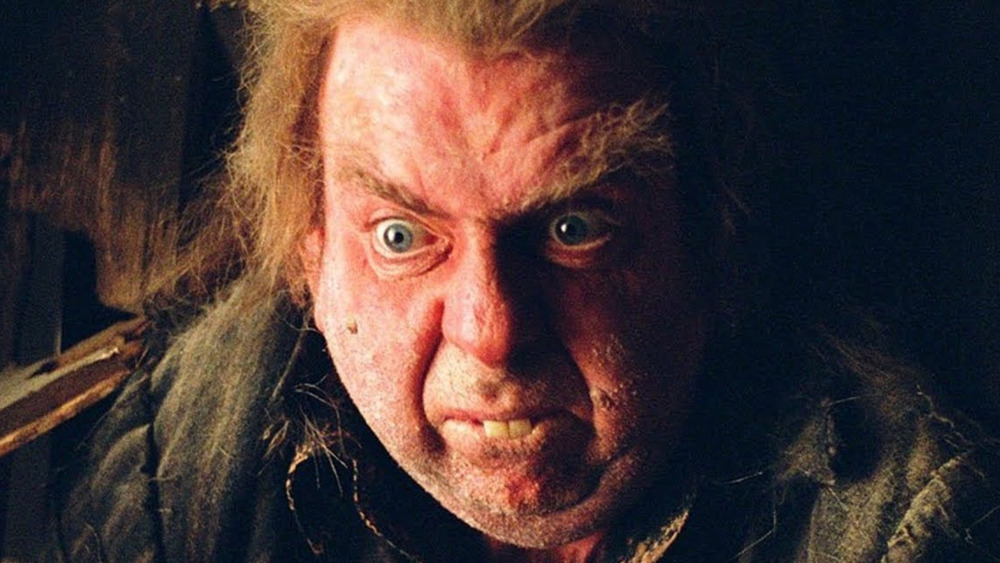
Peter Pettigrew did not stay “loyal” to Voldemort because he believed in the Death Eater cause. He stayed because Voldemort was the only power left that could still use him—and Pettigrew’s whole survival strategy was attaching himself to whoever seemed most dangerous.
Recommended for You:- Why Harry’s Broomsticks Were Always Destined to Save Him
- How the Goblins of Gringotts Hold the Key to Wizarding Power
- How the Time-Turner Could Have Prevented the Battle of Hogwarts
- The Secret Behind Professor Trelawney’s “Fake” Predictions
Pettigrew’s real loyalty: fear
Pettigrew’s pattern is simple: when he feels weak, he finds a stronger protector and hides behind them. That is why he first latched onto James and Sirius at school (brave, popular, powerful), and later latched onto Voldemort (terrifying, influential, and increasingly “inevitable”).
This is also why “loyalty” is the wrong word for Pettigrew. Voldemort openly insults him and treats his devotion as cowardice rather than faith, basically saying Pettigrew serves only because he has nowhere else to go.
After Azkaban, he had nowhere else
The turning point is what happens after Prisoner of Azkaban: Pettigrew’s cover is blown, and he can’t return to normal life. If he goes to the Order, he’s the traitor who sold out Lily and James; if he hides, he’s alone; if he’s caught, he’s finished.
So Pettigrew runs to the one place that still offers a form of “protection”: Voldemort. The Harry Potter Lexicon summary even frames it bluntly—after escaping, Pettigrew sought Voldemort in Albania and kept him alive in his weak state, doing miserable, low-status servant work because that was his best option.
Voldemort gave him a “gift” that was really a leash
If Pettigrew’s main motivation is fear, Voldemort’s main management tool is fear too. When Pettigrew helps resurrect Voldemort, he literally sacrifices his right hand in the ritual, and Voldemort “rewards” him with a magically created silver hand.
But Voldemort pairs that reward with a warning: “May your loyalty never waver again, Wormtail.” That line matters because it shows Voldemort expects disloyalty and builds consequences into his so-called generosity.
In other words, Pettigrew doesn’t just choose loyalty—he’s pushed into it by a system where disobedience is punished instantly, and even gifts can be weapons.
Why he helped bring Voldemort back
A big question in Harry Potter theories is: if Pettigrew is so scared, why would he take the huge risk of finding Voldemort and bringing him back? The answer is that Pettigrew wasn’t choosing a “harder” path—he was choosing the only path he believed might keep him alive.
Once Pettigrew escapes, he knows Sirius and Remus want to kill him, and he assumes the wider wizarding world will either imprison him or execute him for what he did. Voldemort is the one figure who can offer shelter (even if it’s cruel shelter), because Voldemort doesn’t need Pettigrew to be respected—he needs him to be useful.
And Pettigrew is useful in very specific ways:
- He can act unnoticed for long periods (like living as a rat), which makes him good at hiding and spying.
- He will do humiliating tasks without protesting too much, because he’s desperate.
- He will cross lines others might hesitate at, including murder and self-mutilation, when pressured.
Pettigrew is not brave like Bellatrix, or clever like Snape. He is available.
The “real reason”: he mistook control for safety
Here’s the core theory: Pettigrew stayed with Voldemort because he confused being controlled with being safe. In Pettigrew’s mind, a powerful master who owns you is still better than standing alone and being hunted.
That explains his entire arc:
- At Hogwarts, he hides behind bolder friends.
- During the first war, he switches sides when he thinks Voldemort is winning.
- After Voldemort falls, he hides as a pet for 12 years—again choosing safety through invisibility, not honor.
- Once exposed, he goes back to Voldemort because “freedom” would mean facing consequences alone.
This also explains why Voldemort’s control methods work so well on him. Pettigrew doesn’t need ideological speeches; he needs a threat and a place to sleep.
The silver hand proves it wasn’t true loyalty
If Pettigrew had been truly loyal, Voldemort wouldn’t need insurance. But Voldemort did need insurance, and the story later proves it.
In Deathly Hallows, Pettigrew hesitates for a moment when Harry reminds him of a life debt, and that hesitation triggers the silver hand to turn on Pettigrew and strangle him. The same “reward” that marked Pettigrew as Voldemort’s servant also acts like a kill switch, showing Voldemort never trusted him—because Voldemort understood Pettigrew’s real motivation was fear, not faith.
What this means for Harry Potter theories
Many Harry Potter fan theories focus on secret plans, hidden love, or deep ideology, but Pettigrew is a simpler kind of villain. The “real reason” he stayed loyal is that he built his identity around avoiding pain, and Voldemort was the biggest threat in the room—so Pettigrew tried to stand closest to it.