In the enchanting universe of Harry Potter, power seems to rest with the wizards: the Ministry of Magic governs, Hogwarts educates, and famous witches and wizards become legends. Yet, beneath the surface of this magical society, there exists a different, far more quiet authority.
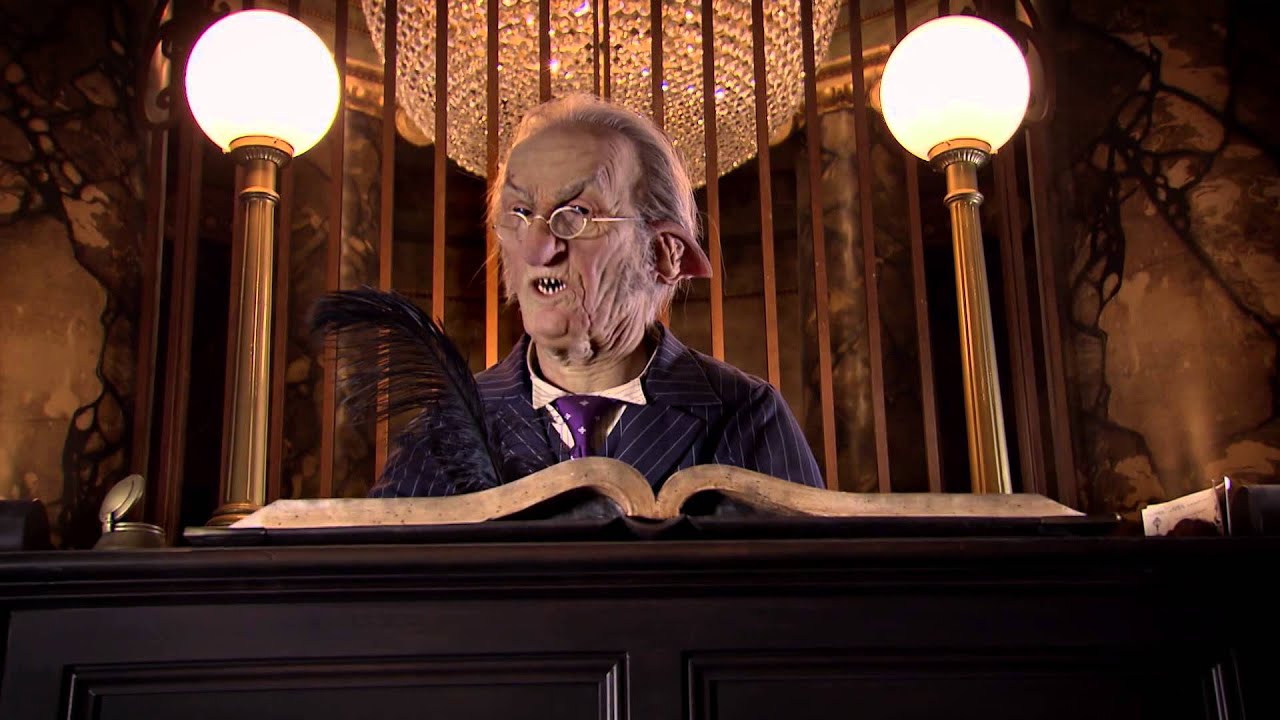
The goblins who run Gringotts Wizarding Bank are not just bankers and vault guards; they are the unseen masters of the wizarding economy and, by extension, the true holders of wizarding power.
This article explores how, through a combination of economic control, unique magic, and centuries of strategy, the goblins hold the key to the entire magical world’s stability and future.
Recommended for You:- The Secret History of Ollivander’s Wand Shop Uncovered
- Why the Deathly Hallows Symbol Is Linked to Hogwarts Founders
- Why Harry’s Broomsticks Were Always Destined to Save Him
- The Real Reason Pettigrew Stayed Loyal to Voldemort
The Unseen Power of Gringotts Bank
To understand goblin power, you must first understand their institution. Gringotts Wizarding Bank, founded in 1474 by the goblin Gringott, is not merely a place to store gold. It is the financial heart of magical Britain and, evidence suggests, a powerhouse with global influence.
It is described as “the safest place in the world” next to Hogwarts, secured by everything from complex enchantments and loyalty-testing spells to security trolls and, in the high-security vaults, dragons.
But its role goes far beyond security:
- Sole Currency Producer: Gringotts mints all wizarding coins—Galleons, Sickles, and Knuts. Each coin is stamped with a serial number identifying the goblin who made it, giving them an innate ability to detect counterfeits.
- Economic Gatekeeper: The bank manages the exchange between Muggle and wizarding money, a critical service for Muggle-born witches and wizards and for the economy’s interaction with the non-magical world.
- Global Reach: While it is the only bank in Britain, it has international dealings. Bill Weasley worked as a Curse-Breaker for Gringotts in Egypt, indicating its global operations.
This total control over money creation, storage, and exchange puts the goblins in a position of unmatched economic influence.
They don’t just hold the gold; they define what gold is and control its flow in and out of the magical system. As a popular fan analysis suggests, historical treaties between wizards and goblins may have granted goblins a monopoly on banking, forbidding wizards from creating their own financial institutions.
A History of Conflict: The Roots of Distrust and Leverage
The relationship between wizards and goblins is not one of friendly partnership, but of tense, strategic co-dependence. Centuries of wizard prejudice and goblin rebellions have created a deep-seated resentment that the goblins have expertly channeled into a source of power.
Key points of historical conflict include:
- Wand Prohibition: Goblins are forbidden by wizard law from carrying wands, a rule that has caused lasting bitterness.
- The Sword of Gryffindor Dispute: A foundational grievance is the belief that Godric Gryffindor stole the goblin-made sword from their finest silversmith, King Ragnuk the First. This story is a cornerstone of goblin cultural memory, symbolizing wizard disrespect for goblin artistry and ownership.
- Bloody Rebellions: The 17th and 18th centuries saw numerous “bloody and vicious” Goblin Rebellions. One in 1612 even used the Hog’s Head Inn in Hogsmeade as its headquarters.
The critical insight is that the goblins have never truly surrendered. They have, instead, secured a position where wizard society cannot function without them. As Bill Weasley explains, there is a belief among goblins, “and those at Gringotts are perhaps most prone to it, that wizards cannot be trusted in matters of gold and treasure”.
This isn’t just prejudice; it’s a business philosophy born of painful experience. Their leverage comes from making themselves indispensable, turning historical oppression into a position of unassailable economic strength.
More Than Bankers: The Sources of Goblin Authority
The power of the goblins extends beyond their vaults. Their unique cultural and magical attributes make them the only beings capable of holding the position they do.
1. Unique Magical and Metallurgical Skills
Goblins possess their own form of wandless magic, distinct from wizard magic. More importantly, they are master metalsmiths. Their silverwork is considered the finest in the world, forming heirlooms for the oldest wizarding families, like the House of Black. This skill is directly tied to finance, as their ability to work precious metals is why they mint currency.
Their deep, intrinsic understanding of metal allows them to create objects like the Sword of Gryffindor, which absorbs only that which makes it stronger, and to instantly detect fake gold. They don’t just handle wealth; they understand its very substance on a magical level that wizards do not.
2. Intelligence and Secrecy
Goblins are highly intelligent and clever, a trait even wizards acknowledge with a hint of fear. They run a flawless, centuries-old banking operation. Their security is legendary, and they are bound by a strict code of secrecy.
As the fan analysis on wizarding power structures notes, wizards have largely agreed not to interfere in “goblin hierarchy and justice,” granting them significant autonomy. This autonomy allows Gringotts to operate as a state-within-a-state, governed by its own rules and loyalties.
3. Economic Stranglehold on the Ministry
Here lies the most potent form of power. If the Ministry of Magic is the government, it needs gold to operate: to pay Aurors, maintain departments, fund Hogwarts, and run its operations.
This gold is stored, managed, and likely loaned by Gringotts. The fan analysis of power structures suggests that while the Ministry can act, its funding must be approved by the Wizengamot (the wizard high court), creating a check on its power. However, the ultimate source of that gold—its security, its authenticity, its very existence—is controlled by goblins.
In essence, the goblins control the lifeblood of the magical state. Any witch or wizard of importance, from the Malfoys to the Ministry itself, is a client of Gringotts and subject to its rules. This is summarized in the table below:
Table: The Pillars of Goblin Power at Gringotts
Case Studies: Goblins Exercising Their Power
The theory is not just abstract; it plays out in key moments of the Harry Potter story.
- The 1998 Break-In: When Harry, Ron, and Hermione break into the Lestrange vault, it is not just a theft. It is a catastrophic breach of Gringotts’ inviolable reputation. The goblin Griphook aids them not for the cause against Voldemort, but for the promised reward of the Sword of Gryffindor—a reclaimed piece of goblin heritage. His loyalty is to his people’s legacy, not to wizard wars. The goblins’ response after the war is telling: they swiftly upgrade security, replacing dragons with Sphinxes, showing an adaptable and relentless focus on reclaiming absolute control.
- The Ludo Bagman Incident: At the Quidditch World Cup, Ministry official Ludo Bagman swindles a group of goblins out of a large amount of gold. This single act of wizard deceit is cited as a key reason goblins remained neutral in the war against Voldemort. It demonstrates that goblin alliances are transactional, based on trust in financial dealings, not on wizard concepts of “good vs. evil.” A single bad debt can sway their stance in a global conflict.
- The Warning of Greed: The poem on Gringotts’ doors warns against the “sin of greed”. This is profoundly ironic, as the goblins themselves are often accused of greed. Yet, the warning foreshadows the fate of those like Voldemort, whose greed for power and objects leads to his downfall. The goblins, in their detached way, understand that the desire to “take, but not earn” is a fatal flaw in their clients. They sit above the fray, observing how the pursuit of the treasure they guard destroys wizards.
The Future: A Shifting Balance of Power?
What does this mean for the future of the wizarding world? The post-Voldemort era, led by Kingsley Shacklebolt, presents an opportunity for change. The old prejudices that fueled the rebellions could be addressed. Bill Weasley, who worked closely with goblins, represents a wizard who understands and respects them.
However, the fundamental power dynamic remains. The economy is still entirely in goblin hands. Any attempt at reform, any Ministry initiative, any large-scale project requires gold, and that gold is guarded by long-fingered hands that remember every slight. The goblins may not want to rule the Ministry, but they don’t need to. By controlling the gold, they already veto any action they disapprove of through the simple means of withdrawing cooperation or calling in debts.
As the wizarding world rebuilds, its leaders would be wise to remember Hagrid’s first warning to Harry: “Never mess with goblins”. It was not just a security tip, but a profound piece of political advice. True power in their world does not always wave a wand; sometimes, it quietly counts the coins, forges the swords, and holds the keys to every vault—and thus, to every ambition.