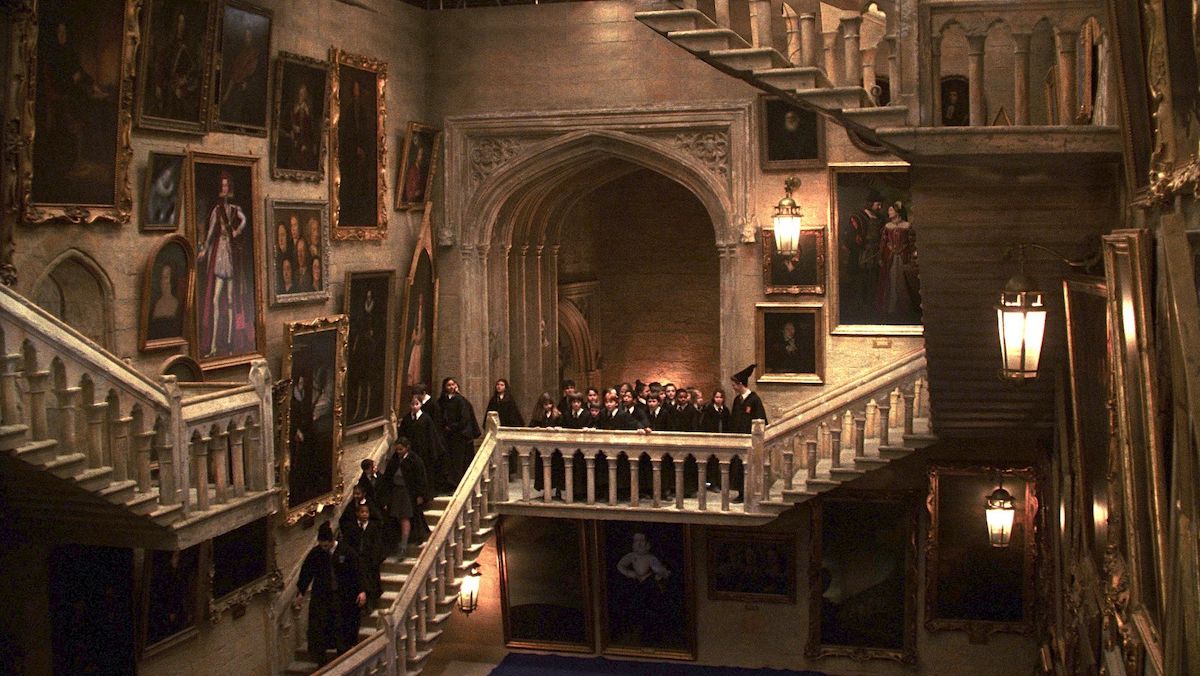
Hogwarts’ staircases are famous for their unpredictable tricks, like vanishing steps and paths that change by the day. Fans love theorizing why they move, with one creepy idea suggesting the castle itself is alive and feeding on student mishaps. This draws from book details in simple ways.
Recommended for You:- Why Ron’s Broken Wand Wasn’t an Accident
- The Hidden Meaning Behind Hermione’s Cat Crookshanks
- Why the Forbidden Forest Is More Important Than You Realize
- The Dark Connection Between Dementors and the Veil in the Ministry
Staircases in the Books
Hogwarts has 142 staircases of all kinds, from wide sweeping ones to narrow rickety ones. Some lead to different places on Fridays, and others have a vanishing step halfway up that traps feet unless you jump it. J.K. Rowling describes this first in Harry Potter and the Philosopher’s Stone, where Harry learns the castle layout shifts a lot.
These quirks make navigation tough for new students. The books note trick stairs catch folks like Neville often, but older students know to skip them. Unlike films with constantly shifting grand stairs, books focus on timed changes and traps, not endless motion.
Key Scenes from the Series
In Philosopher’s Stone, Harry hears about the 142 staircases during his first night, setting a tone of magical chaos. Neville falls into a vanishing step many times, needing pulls to escape.
Goblet of Fire shows Harry trapped in one while under his Invisibility Cloak, his leg sinking deep as he chases clues. The golden egg slips and wails below, drawing Filch and Snape. This stair links second to fourth floor, behind a tapestry shortcut to Gryffindor Tower.
In Half-Blood Prince, similar shortcuts highlight dangers during chases. Deathly Hallows uses stairs in the Battle of Hogwarts, with duels on landings and Hermione turning one into a slide to flee Death Eaters.
Rowena Ravenclaw’s Design
Rowena Ravenclaw invented the moving stair concept as a brilliant witch and founder. Her love for clever puzzles fits stairs that test wits and memory. Pottermore notes (via wiki sources) she wove this into the castle for dynamic access.
Why her? Ravenclaw valued intelligence, so stairs force students to learn patterns, unlike straightforward Muggle designs. Books don’t detail spells, but her diadem shows her skill with enhancing mind-related magic.
Everyday Challenges for Students
First-years like Harry struggle most, memorizing 142 paths amid classes. Older kids treat jumps as second nature, building caution early. Neville’s repeated falls add humor but show real risks in long robes.
Ron gripes about getting lost, blaming the castle’s “moving around.” Prefects like Percy guide groups, yelling warnings. These teach resilience, as wizards face worse than stairs.
Defense Role in Crises
Stairs act as built-in guards. In battles, they shift to block foes or aid escapes, like the slide in Deathly Hallows. Theories say founders enchanted them against invasions, isolating threats.
Ancient magic powers this, woven into stones for self-maintenance in sieges. During Voldemort attacks, stairs reveal as barriers no enemy predicts. Books imply the castle responds to danger, stairs included.
The Creepy Theory: A Living Castle
Here’s the dark twist: Hogwarts lives, and moving stairs “feed” on fear from falls. Books describe the castle as having a mind—portraits chat, armor walks, Peeves haunts. Excess student magic over centuries animates it, like unintended hauntings.
Vanishing steps trap kids, spiking panic that “fuels” the magic. Neville’s constant victims suggest it picks weak links for energy. Battle shifts show sentience, prioritizing defenders. Fan theories call stairs poltergeist-like, thriving on screams.
Rowena’s design might bind a spirit, stairs as veins pulsing with emotion. No direct book proof, but castle defenses awaken in Deathly Hallows, statues marching. Creepy parallel: Peeves born from magic buildup, stairs as older kin.
Evidence from Book Quotes
Direct quote from Philosopher’s Stone: “There were a hundred and forty-two staircases at Hogwarts: wide, sweeping ones; narrow, rickety ones; some that led somewhere different on a Friday; some with a vanishing step halfway up that you had to remember to jump.” This hints intent beyond convenience.
Goblet of Fire: “Neville’s foot had sunk right through a step halfway up the staircase. There were many of these trick stairs at Hogwarts.” Harry’s own trap: leg “jammed tightly,” egg crashing like a drum.
Deathly Hallows slide: Hermione casts Glisseo, turning stairs to chute, Death Eaters smash into stone tapestry. Shows flexibility for survival.
Fan Theories Explored
One idea: stairs save time across the huge castle, shortcuts adapting needs. Another: pure whimsy, British school traditions amped magically.
Creepier: castle absorbs accidental magic from kids, stairs as outlets preventing explosions. Or defense only, hiding secrets like rooms. Films amp motion for visuals, but books keep mystery.
SEO note: Harry Potter staircases theory ties to “Hogwarts secrets,” boosting searches on moving staircases explained.
Safety Issues at Hogwarts
No railings on some, plus motion equals falls. Muggle schools ban such risks, but wizards ignore—mirrors heal breaks. Critics say it builds character, but Neville proves hazards.
Filch patrols, but traps snag him too. Overall, stairs teach vigilance over safety nets.
Comparisons: Books vs Movies
Books: subtle changes, trick steps key. Movies: grand pivoting stairs, Percy warns “keep an eye.” Visual flair, but canon sticks to quotes.
Deathly Hallows film tones down motion. Books let imagination fill “how.”
Why This Makes Hogwarts Magical
Stairs blend wonder and peril, mirroring wizard life. Creepy reason? Castle hungers for youthful chaos to stay alive. Ravenclaw’s genius hides darker pulse.
Students adapt, turning fear to skill. Next time you reread, watch stairs—they watch back.