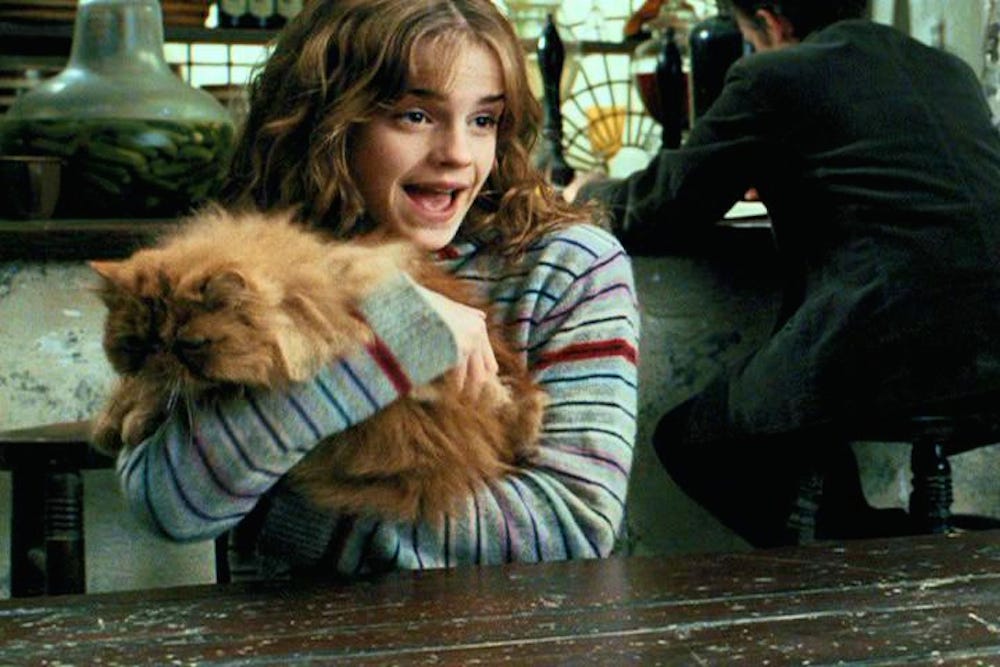
Crookshanks is not just “Hermione’s pet cat” in Harry Potter and the Prisoner of Azkaban—he is written like a living clue. His hidden meaning is that truth can be recognised even when adults, systems, and friends get fooled, and sometimes the smallest character (even a cat) pushes the story towards justice.
Recommended for You:- The Sorting Hat reads potential, not personality
- Dumbledore Was Actually “Death” All Along (Tale of the Three Brothers Explained)
- Why Ron’s Broken Wand Wasn’t an Accident
- The Creepy Reason Why Hogwarts Staircases Move
Crookshanks is “truth sense”
In Book 3, almost everyone believes Scabbers is only a harmless old rat, but Crookshanks keeps reacting like something is wrong with him. This matches what we learn outside the main novels too: Crookshanks is half-Kneazle, and Kneazles are known for being unusually clever and good at spotting untrustworthy people.
So the hidden meaning is simple: Crookshanks represents instinct + intelligence working together, like a natural lie detector in the story. Ron and even Hermione keep arguing about “pet behaviour,” but the book quietly shows the reader that Crookshanks is seeing a deeper reality.
He exposes “fake identity”
The biggest secret in Prisoner of Azkaban is identity—Sirius is not the villain in the way the wizarding world claims, and Scabbers is not what he looks like. Crookshanks fits right into this theme because he recognises Peter Pettigrew even when Pettigrew is hiding as Scabbers.
That makes Crookshanks a symbol of how the truth can sit right in front of you for years, but you still miss it if you only trust labels, rumours, and official stories. In Indian English we can say it like this: Crookshanks doesn’t get fooled by “outer cover,” he looks at the real person inside.
He quietly supports Sirius
Crookshanks is also important because he helps Sirius Black at key moments in the plot, especially in Sirius’s effort to reach Pettigrew and prove what really happened. One famous example is Crookshanks helping with the Whomping Willow secret by pressing the knot that freezes it, which allows access to the tunnel connected to the Shrieking Shack.
So symbolically, Crookshanks becomes a guide who helps an innocent man (Sirius) move towards freedom and justice, even while the whole system is hunting him. This also flips a common idea: a “random cat” ends up behaving more morally than many “respectable” witches and wizards.
The name is a clue too
Rowling often hides meaning in names, and “Crookshanks” itself points to his physical description—crooked/bandy legs—and the way he moves. MuggleNet’s name-origin note even says Rowling herself described giving Hermione’s cat “bandy-legs,” and the name links to “crooked” + “shank (leg)”.
This matters for the theory because his “crooked legs” mirror the book’s world where the straight, official story is actually bent. In other words, even his body and name hint that this year’s truth will not walk in a straight line—it will come through secret passages, hidden identities, and unexpected helpers.
Hidden meaning for Hermione
Crookshanks also reflects Hermione’s own journey in Book 3. Hermione is the most logical student, but she is so busy, stressed, and overloaded that she misses what her own cat is trying to show, which is a nice reminder that being “book smart” is not always enough.
In that sense, Crookshanks represents a balance Hermione needs: knowledge plus observation, rules plus reality. And he also pushes her into messy emotions—friendship fights, guilt, and responsibility—which is part of Hermione growing up beyond only perfect answers.